

Delhi’s Indira Gandhi International Airport (IGIA) is preparing to launch India’s first large-scale automated airport air train system, aimed at improving connectivity between terminals and reducing transfer delays for passengers.
After years of delays and planning discussions, Delhi International Airport Limited (DIAL) has decided to directly finance and execute the project instead of relying on private concessionaires. The automated people mover (APM) system is expected to cost between ₹3,000 crore and ₹4,000 crore and could become operational within the next 30 months.
The upcoming air train will run along a 7.7-kilometre corridor connecting Terminal 1, Terminal 2, Terminal 3, Aerocity and the airport’s cargo district. Similar systems are already operational at major global airports in cities such as Seoul, Zurich and Jakarta.
Airport officials say the project is becoming essential as Delhi airport handles a rapidly growing number of transit passengers. The share of connecting passengers at IGIA has reportedly increased from around 5% in 2006 to nearly 25% today, with international traffic continuing to rise.
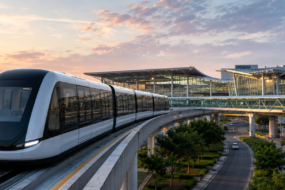
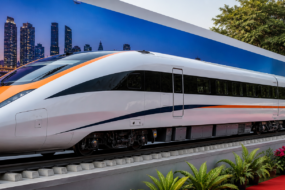
The system will function as a driverless shuttle train operating on dedicated tracks within the airport zone. Passengers will likely gain access by scanning their boarding passes before entering the stations. The airport operator says transit passengers changing flights will be allowed to use the service free of cost, while non-passengers may need to pay a fee.
Officials also revealed that during peak transfer periods, some trains may operate as direct express services between terminals without stopping at intermediate stations such as Aerocity or cargo areas. This is expected to reduce transfer times for passengers moving between domestic and international flights.
DIAL initially attempted to develop the project under a concessionaire model where a third-party operator would build and run the system. However, the earlier tender process failed to attract sufficient interest, prompting the airport operator to take direct control of the project.
The company now plans to recover investments through airport tariffs and non-aeronautical revenue streams such as advertising while attempting to minimise the burden on passengers.
Construction work for tracks and stations is expected to be handled by Indian infrastructure firms, while international companies may supply the train technology and automated operating systems.
The project is part of Delhi airport’s larger strategy to compete with major international transit hubs such as Dubai, Singapore and Doha by offering faster, smoother and more reliable passenger transfers.
Experts believe the air train could significantly reduce congestion caused by road-based transfers between terminals, which currently remain one of the biggest operational challenges at India’s busiest airport.
One reply on “Delhi Airport’s Driverless Air Train Project Finally Takes Off to Transform Passenger Transfers”
[…] Originally published on 24×7-news.com. […]
Comments are closed.