

India is preparing for a major transformation in highway travel as the government plans to remove all physical toll plazas across the country by the end of 2026 and replace them with advanced Multi-Lane Free Flow (MLFF) tolling systems.
Union Minister Nitin Gadkari announced that the nationwide transition aims to create barrier-free, fully automated toll collection on national highways, reducing congestion and improving travel efficiency for millions of motorists.
The move comes as existing toll booths continue to face traffic bottlenecks despite the widespread adoption of FASTag systems. Under the new model, vehicles will no longer need to stop or slow down at toll points, allowing uninterrupted highway movement.
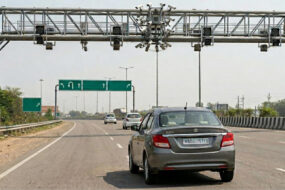
The MLFF system will use overhead gantries equipped with advanced cameras, sensors and FASTag readers to automatically identify vehicles and deduct toll charges in real time. Authorities believe the system will significantly reduce waiting times, lower fuel consumption and minimise emissions caused by long vehicle queues at toll booths.
Officials say more than 1,100 toll plazas across India will be gradually converted to the new system over the next two years as part of the nationwide rollout.
Artificial intelligence and LiDAR-based technology will play a central role in the new tolling infrastructure. The National Highways Authority of India (NHAI) has partnered with technology company Cron AI to deploy advanced traffic-monitoring systems capable of handling complex Indian road conditions.
The technology combines edge AI, automatic number plate recognition (ANPR), 3D perception and axle-based vehicle classification to identify vehicles accurately even in situations involving lane indiscipline, traffic overlap, fog or heavy rain.
Pilot projects using the new technology are already operational at selected highway locations in Rajasthan and Telangana, where the system is reportedly processing tens of thousands of vehicles daily.
Under the MLFF model, FASTag will continue to remain the primary payment mechanism. Vehicles without valid FASTags or insufficient account balance may receive digital notices requiring payment within a specified time period to avoid penalties or double toll charges.
The government believes the new tolling approach will provide major benefits to both private motorists and commercial transport operators. Faster travel speeds, lower fuel usage and improved predictability for logistics companies are expected to strengthen India’s highway transport network and support economic growth.
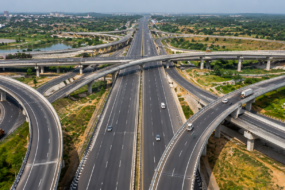
The toll system upgrade is also being integrated with broader highway modernisation projects, including new expressways, bypasses and multi-lane corridor expansions currently underway across the country.
With the planned removal of physical toll barriers, India aims to create a more efficient and technology-driven highway ecosystem aligned with global smart transportation standards.
One reply on “India Plans Barrier-Free Highways as Government Targets Removal of All Toll Plazas by 2026”
[…] Originally published on 24×7-news.com. […]
Comments are closed.