

India’s ambition to transform itself into a global manufacturing hub is encountering renewed resistance from two of the world’s largest economies, as both the United States and China take trade-related actions targeting New Delhi’s industrial incentive programs.
The United States has imposed preliminary duties of up to 126% on certain solar imports from India, arguing that domestic subsidies give Indian manufacturers an unfair advantage. According to reports, the move could significantly restrict Indian solar exporters’ access to the American market.
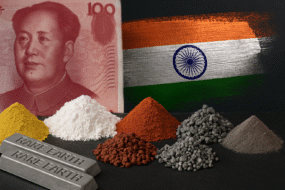
Simultaneously, China has advanced its complaint at the World Trade Organization (WTO), with the dispute settlement body agreeing to set up a panel to examine Beijing’s claims. China argues that India’s incentive schemes — particularly in sectors like renewable energy and automobiles — favor domestic products over foreign imports. The step follows unsuccessful bilateral consultations, which mark the initial phase of WTO dispute resolution.
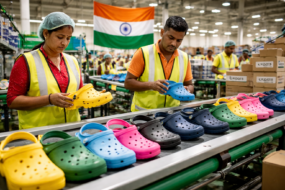
At the heart of the controversy is India’s Production-Linked Incentive (PLI) scheme, launched in 2020. The program aims to boost domestic manufacturing across 14 sectors, including electronics, pharmaceuticals, solar modules, and medical devices. With a total financial outlay of approximately ₹1.91 trillion (around $21 billion), the PLI scheme is one of India’s largest industrial policy initiatives.
Critics from major trading partners contend that the subsidies distort competition by incentivising local production. Indian firms such as Waaree Energies, Adani Enterprises, and Reliance Industries have expanded manufacturing capacities under the PLI framework and related policy support.
The trade challenges come at a delicate diplomatic moment. India and the United States recently moved to ease tariff tensions that had previously placed Indian exports under some of the highest US duties in Asia. Meanwhile, New Delhi has also been working to stabilise ties with Beijing after relations deteriorated following border clashes in 2020.
Despite mounting pressure, Indian officials maintain that the PLI scheme is consistent with WTO rules and is critical to revitalising domestic manufacturing. The government has set a target of raising manufacturing’s contribution to GDP to 25%, up from the current level of roughly 17%.
Economists argue that while the PLI program has attracted investment and boosted capacity, growing international scrutiny may prompt India to recalibrate its approach. Future policy support could shift toward innovation, technology upgrades, and productivity improvements rather than direct financial incentives.
For now, India’s industrial strategy remains central to its economic growth plans — but it is increasingly becoming a flashpoint in broader global trade tensions involving the world’s leading economies.


One reply on “US Tariffs and China’s WTO Move Put Pressure on India’s Manufacturing Push”
[…] Originally published on 24×7-news.com. […]