

Russia has openly challenged the core justification behind the ongoing US and Israeli military strikes on Iran, asserting that there is no credible evidence Tehran was developing nuclear weapons.
Speaking during a diplomatic visit to Brunei, Russian Foreign Minister Sergey Lavrov said Moscow has not seen proof to support claims that Iran was pursuing nuclear arms — the principal reason cited by Washington and Tel Aviv for launching military operations.
“We still see no evidence that Iran was developing nuclear weapons,” Lavrov stated, adding that the conflict is already inflicting serious humanitarian and economic consequences across the Middle East, particularly affecting Arab nations.
IAEA Reports No Confirmed Damage
Meanwhile, the International Atomic Energy Agency (IAEA) provided an update that appeared to temper immediate nuclear safety concerns.
At a special session of its Board of Governors, IAEA Director General Rafael Grossi said the agency has found no indication of damage to major Iranian nuclear facilities, including the Bushehr Nuclear Power Plant and the Tehran Research Reactor. While Iran has claimed that its Natanz enrichment facility was struck, the UN nuclear watchdog reported no verified structural damage or abnormal radiation levels.
Grossi urged all sides to exercise restraint to prevent escalation that could threaten nuclear safety.
Iran’s envoy to the IAEA insisted Natanz had been targeted, but the agency maintained that inspections and monitoring data have not confirmed significant impact.
US and Israel Stand by Their Position
Despite Russia’s criticism, US and Israeli officials continue to defend the military campaign as a preventive action aimed at stopping Iran from acquiring nuclear capabilities.
At the United Nations, Israeli Ambassador Danny Danon reiterated that preventing a nuclear-armed Iran remains central to their strategic objective. He acknowledged civilian casualties but stressed that operations are directed at military infrastructure.
“We will do whatever is necessary to ensure they do not gain nuclear capability,” Danon said, adding that Israel targets military assets based on intelligence assessments.
Conflict Expands Across the Region
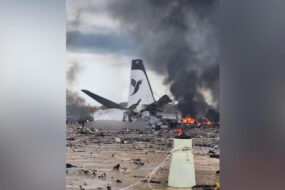
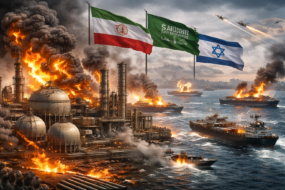
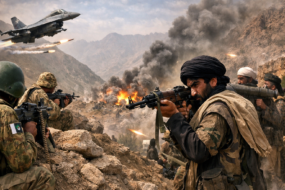
The confrontation has widened beyond Iran and Israel. Missile and drone exchanges have been reported involving Hezbollah and Gulf states, while military facilities in Bahrain, Qatar, Saudi Arabia, and the UAE have faced heightened security threats. Strikes have also been reported within Israeli and Lebanese territories.
The broader regional instability has rattled global energy markets, particularly due to concerns over shipping disruptions in the Strait of Hormuz — a critical artery for global oil supplies.
As tensions mount, international diplomatic efforts are intensifying, with multiple global actors calling for immediate de-escalation to prevent a wider regional war.
One reply on “Russia Questions Iran War Rationale, Says No Evidence of Nuclear Weapons Program”
[…] Originally published on 24×7-news.com. […]