

Indian equity markets began the week under heavy pressure, with benchmark indices plunging in early trade as geopolitical tensions in the Middle East triggered a global risk-off sentiment.
The S&P BSE Sensex dropped nearly 1,000 points in opening trade, while the NSE Nifty50 slipped more than 1%, marking the sharpest intraday decline for both indices in months.
As of early morning trade:
- Sensex fell to around 80,400 levels
- Nifty50 slipped below the 25,000 mark
The sudden correction follows coordinated US–Israel military strikes on Iran over the weekend and reports of retaliatory missile and drone attacks in the region.
Crude Oil Becomes the Central Market Risk
Brent crude prices surged more than 7% to above $82 per barrel — the highest level in months — as investors feared disruption to global energy supplies.
The Strait of Hormuz, a key maritime route handling nearly 20% of global oil trade and over 40% of India’s crude imports, has emerged as the biggest concern. Any sustained disruption could significantly impact India’s economy.
According to brokerage estimates:
- Every $1 rise in crude increases India’s annual import bill by approximately $2 billion
- A $10 rise in crude can raise inflation by 20–25 basis points if passed on to consumers
Analysts warn that markets may temporarily shift from earnings-driven to oil-driven movements.
Rupee Weakens, Bond Yields Climb
The spike in crude triggered broader macro concerns:
- The rupee depreciated against the US dollar
- Government bond yields moved higher amid inflation fears
Rising bond yields tend to reduce equity attractiveness, adding further pressure on stocks.
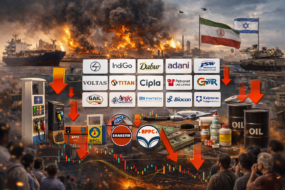
Sector-Wise Impact: Broad-Based Selling
All major sectoral indices traded in the red during early hours. Broader markets saw deeper cuts:
- Nifty Small-cap index fell nearly 4%
- Nifty Mid-cap index declined over 3%
Sectors Under Pressure:
- Oil marketing companies
- Aviation
- Paint and tyre manufacturers
- Chemicals
- Ports and logistics
Companies such as BPCL, HPCL, IOC and Reliance Industries saw declines, while aviation stocks were hit by concerns over rising fuel costs.
The Only Bright Spots: Upstream Oil and Defence
Not all sectors were impacted equally.
Upstream oil producers gained as higher crude prices improve revenue realisations:
- ONGC advanced strongly
- Oil India also posted gains
Defence stocks may also attract investor interest amid rising geopolitical tensions.
What Could Happen Next?
Brokerage scenario analysis suggests:
- Limited retaliation may push crude up by $5–10 per barrel
- Direct damage to oil infrastructure could add $10–12 per barrel
- A serious Strait of Hormuz disruption could drive crude above $90
- A broader regional war could push prices beyond $100
Market experts caution that the duration and intensity of the conflict will determine the scale of impact.
Should Investors Panic?
Strategists advise caution rather than panic selling. Historical market data suggests that geopolitical crises often create short-term volatility but do not permanently derail long-term trends.
Investors are advised to:
- Avoid emotional selling
- Monitor crude price trends
- Watch developments around Hormuz shipping
- Gradually accumulate quality stocks in domestic consumption and defence sectors during weakness
For now, crude oil and geopolitical developments remain the dominant triggers for Indian equities. Until clarity emerges, volatility is likely to stay elevated.



One reply on “Markets Tumble as Oil Shock Jolts Dalal Street Amid Middle East Escalation”
[…] Originally published on 24×7-news.com. […]