

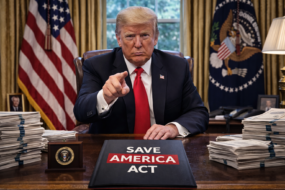
Even as former US President Donald Trump celebrates a breakthrough with China over tariffs and trade, his “tariff diplomacy” appears to have found little success with India.
Following Trump’s meeting with Chinese President Xi Jinping in Busan — where the US agreed to reduce tariffs in exchange for Chinese cooperation on fentanyl and rare earths — attention turned to India. Trump claimed that Washington and New Delhi were “close to a trade deal,” but India has made it clear it won’t be rushed into signing anything under pressure.
Commerce and Industry Minister Piyush Goyal, speaking in Berlin last week, reaffirmed that India does not negotiate “with a gun to our head.” He emphasized that India views trade pacts as long-term strategic partnerships built on mutual trust and equality, not as responses to foreign sanctions or political deadlines.
“We are talking to the US, but we don’t do deals in a hurry or with deadlines. Trade deals must benefit both sides,” Goyal said.
The minister also criticised Washington’s recent sanctions on Russian oil suppliers Rosneft and Lukoil, noting that other Western nations like Germany and the UK were seeking exemptions, so India should not be singled out.
Negotiations Drag On
India and the US have been negotiating a bilateral trade deal since March, but talks hit a roadblock over US access to India’s agriculture and dairy markets — sectors New Delhi considers highly sensitive due to cultural and economic reasons.
Despite Trump’s imposition of a 50% tariff on Indian exports and secondary sanctions over Russian oil purchases, India has continued discussions calmly, aiming to safeguard domestic interests.
Trump’s attempts to use tariffs as leverage — a tactic that worked modestly with China — have failed to move India, which continues to prioritize strategic patience over external pressure.
India’s Steady Approach
Goyal has consistently emphasized that India negotiates “from a position of strength.” Rather than reacting to Trump’s self-imposed deadlines, India has focused on diversifying trade partnerships, boosting domestic manufacturing, and strengthening internal demand.
Experts say this signals India’s growing economic self-confidence. By resisting hasty concessions, New Delhi is reinforcing its stance as a sovereign, assertive player in global trade.
While the US seeks wider access to India’s markets for agriculture, digital goods, and medical devices, India is prioritizing better access for its IT services, textiles, and pharmaceutical exports.
The Bigger Picture
As the world undergoes post-pandemic trade realignments, India’s measured posture — neither protectionist nor submissive — stands out. It demonstrates how developing nations can balance globalization with domestic welfare.
Both sides remain in dialogue, but officials caution that a final deal will only emerge once it aligns with India’s long-term economic interests.
“If the deal is beneficial for both sides, there will be a deal,” Goyal reiterated.
India’s refusal to bend under tariff threats reflects not obstinance, but maturity — a strategic resolve that underscores its emergence as a confident economic power on the global stage.


2 replies on “India Refuses to Be Rushed Into Trade Deal Despite Trump’s Pressure”
[…] Originally published on newsworldstime.com. […]
[…] Originally published on newsworldstime.com. […]
Comments are closed.