

India is stepping up efforts to strengthen its energy security by considering a massive undersea gas pipeline project connecting Oman directly to India. The move comes as growing tensions around the Strait of Hormuz raise concerns over possible disruptions to global energy supplies.
The proposed project, estimated to cost nearly ₹40,000 crore ($4.8 billion), aims to ensure uninterrupted natural gas imports from the Gulf region. According to officials from the petroleum ministry, the pipeline could take around five to seven years to complete if it receives final approval.
India’s demand for natural gas has been increasing steadily as the country focuses on expanding cleaner energy usage. Current gas consumption stands at nearly 190-195 million standard cubic metres per day (mmscmd), while projections suggest demand could rise to 300 mmscmd by 2030. LNG imports are also expected to grow significantly over the next few years.
To move the project forward, the government is expected to ask public sector companies including GAIL, Engineers India, and Indian Oil Corporation to prepare a detailed feasibility report.
The proposal is currently based on a preliminary assessment submitted by South Asia Gas Enterprise (SAGE), a private consortium headquartered in New Delhi.
Pipeline Route and Capacity
The proposed Middle East-India Deep-water Pipeline (MEIDP) will stretch nearly 2,000 kilometres beneath the Arabian Sea, connecting Oman to the Gujarat coast in India. The pipeline is expected to transport around 31 mmscmd of natural gas.
Officials stated that the route has been designed to avoid politically sensitive regions while allowing India access to gas reserves from countries such as Oman, United Arab Emirates, Saudi Arabia, Iran, Turkmenistan and Qatar.
The project would operate at depths of nearly 3,450 metres, making it one of the deepest subsea gas pipelines ever attempted globally. SAGE reportedly conducted technical studies and installed around 3,000 metres of test pipeline along the proposed route to study seabed conditions.
Hormuz Disruption Triggered Urgency
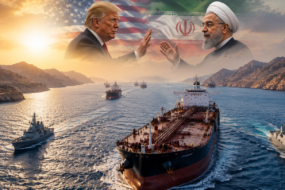
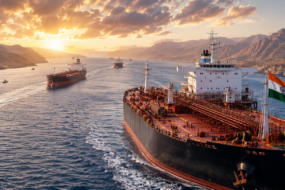
India’s dependence on the Strait of Hormuz remains significant, with nearly two-thirds of its LNG imports passing through the strategic maritime route in 2025. Temporary disruptions earlier this year during rising tensions involving Iran, the United States and Israel highlighted the country’s vulnerability to supply shocks and sharp price increases.
The crisis has also exposed India’s limited natural gas storage infrastructure. Unlike crude oil reserves, the country currently lacks substantial strategic gas storage facilities, making it difficult to manage supply disruptions or stockpile gas during periods of lower prices.
Experts also point out that countries like China have spent years building extensive overland gas pipeline networks and storage systems, helping them better manage global supply disruptions compared to India.

One reply on “India Pushes ₹40,000 Crore Oman-India Undersea Gas Pipeline Amid Strait of Hormuz Concerns”
[…] Originally published on 24×7-news.com. […]
Comments are closed.