

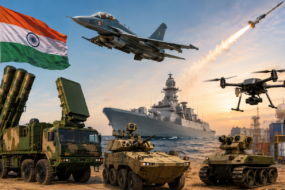
India is rapidly transforming its defence sector with a stronger focus on indigenous manufacturing, military modernisation and strategic self-reliance amid rising geopolitical tensions and growing global defence demand.
As one of the world’s largest military spenders, India is increasing investments in domestic defence production while reducing dependence on foreign imports. The shift is being driven by major policy reforms, higher defence allocations and the government’s broader vision under the ‘Make in India’ and ‘Aatmanirbhar Bharat’ initiatives.
In the Union Budget 2026, the defence capital acquisition allocation was raised to ₹2.2 trillion, marking an 18% increase compared to the previous year. Nearly 75% of procurement is expected to come from Indian suppliers, highlighting the government’s push to strengthen local defence manufacturing capabilities.
The government has also indicated plans to gradually increase defence spending from around 1.9% to nearly 2.5% of GDP over the next five years. Officials believe this will help accelerate military modernisation while creating a globally competitive domestic defence ecosystem.
For decades, India’s defence sector faced challenges such as heavy reliance on imports, complex procurement procedures, limited private sector participation and weak supply-chain infrastructure. These issues slowed technological advancement and restricted India’s ability to build long-term defence manufacturing strength.
To address these concerns, India introduced major procurement reforms through the Defence Acquisition Procedure (DAP) 2020. The policy prioritises Indian manufacturers under procurement categories such as “Buy Indian” and “Buy & Make Indian.” In addition, Positive Indigenisation Lists now restrict the import of hundreds of defence-related products to encourage domestic production.
The government has further expanded incentives for sectors including drone manufacturing and defence technology innovation. Foreign direct investment norms in defence production have also been relaxed to attract global partnerships and advanced technology transfer.
India is simultaneously developing dedicated defence industrial corridors in Uttar Pradesh and Tamil Nadu to boost manufacturing capacity, investment and research opportunities. These corridors are expected to support co-development and co-production agreements with international defence companies while expanding local supply chains.
Early signs of progress are already visible. Indigenous defence production and exports have grown significantly in recent years, with Indian-made systems increasingly gaining international attention.
However, experts caution that global supply-chain disruptions and rising worldwide military demand could create delivery delays for some flagship projects, including the Tejas fighter aircraft programme. To manage these pressures, the government has introduced emergency procurement powers and joint-production arrangements aimed at strengthening domestic manufacturing capacity.
Analysts believe sustained defence investment could generate major economic benefits through advanced manufacturing, research and development, employment generation and technology growth. At the same time, maintaining fiscal discipline and ensuring resilient supply chains will remain crucial for India’s long-term defence ambitions.
With defence reforms accelerating, India is positioning itself not only as a major military power but also as an emerging global defence manufacturing hub with growing export potential.

One reply on “India Pushes Defence Self-Reliance as Domestic Manufacturing and Military Modernisation Gain Momentum”
[…] Originally published on 24×7-news.com. […]
Comments are closed.